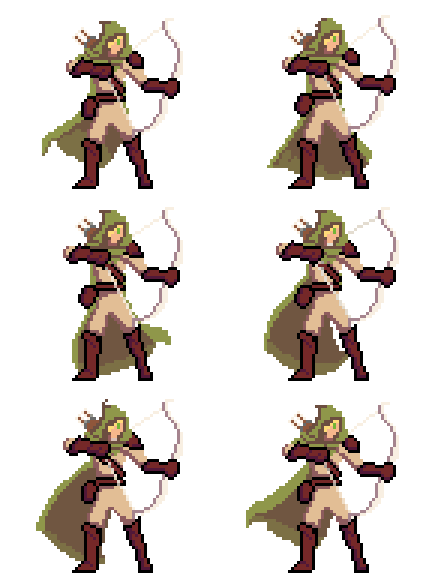
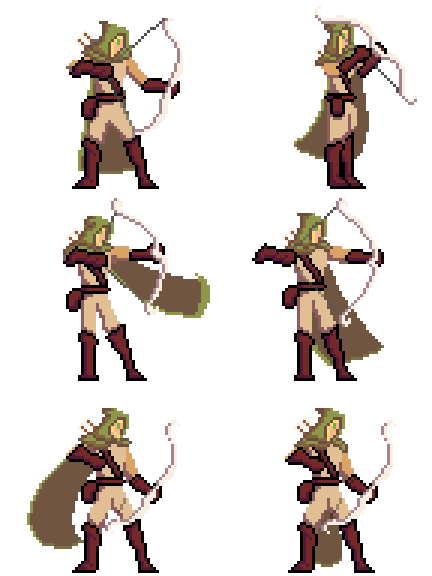
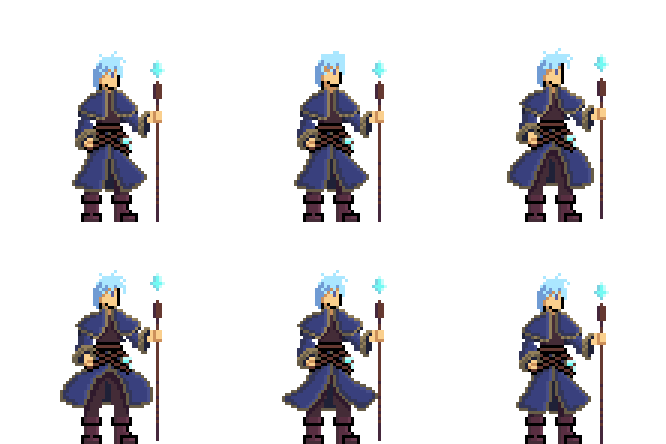
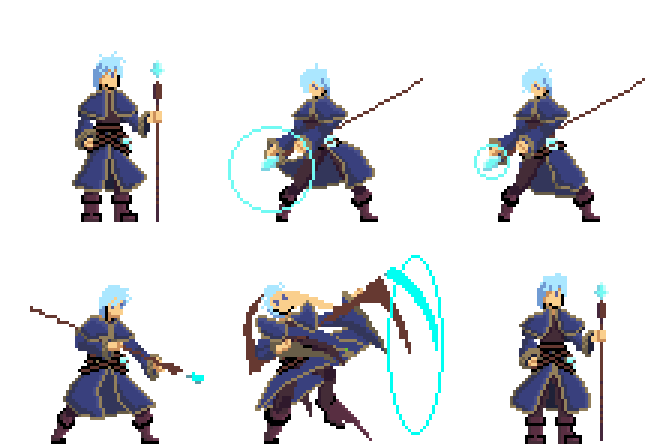


Dungeonbound (Ongoing Project)
About:
DungeonBound is a roguelike card-based RPG where every decision counts. Build your party, craft powerful synergies, and plan elaborate combos to overcome the depths of the dungeon.
Role:
Solo developer & designer
Inspiration:
DungeonBound began as a personal challenge — to create a game that blends the core elements of my favourite genres into one cohesive experience.
- From RPGs like Final Fantasy, I drew inspiration from the freedom of party composition, the thrill of discovering new classes, and the satisfaction of building synergistic teams through skill trees and abilities.
- From card games such as Digimon Card Game, Yu-Gi-Oh!, and Shadowverse, I wanted to capture the strategic depth of deckbuilding — crafting the perfect strategy from a pool of seemingly random resources.
- And from roguelikes like Hades, Slay the Spire, and Balatro, I implemented the addictive replayability and freshness of each run, where no two playthroughs ever feel the same.
DungeonBound is ultimately a celebration of strategy, discovery, and experimentation — a love letter to the genres that shaped my passion for game design.
UI/UX Design:
Traversal UX (Discovery + Readability)
To evoke a sense of discovery without disorienting the player, I designed the traversal flow around “glanceable choices.” Nodes are spaced and grouped to communicate risk/reward at a glance, with consistent iconography and micro-feedback on hover/selection so players always understand where they can go next and what a choice implies. The result is a map that feels exploratory, but never confusing.
Battle UI (Clarity under Complexity)
Combat is where decision density spikes, so I treated the battle UI as an information hierarchy problem:
- Primary layer: immediate actions and turn-critical information (hand, energy/resources, intent/targets).
- Secondary layer: synergy and build context (buffs/debuffs, passive effects, party roles).
- Tertiary layer: deeper inspection on demand (tooltips, expanded panels), so players can dig in without cluttering the default view.
2D + 3D Interface Exploration
I experimented with a hybrid interface where 3D elements provide spatial context and “presence,” while 2D overlays handle precision and readability (cards, stats, tooltips). This let the game feel like an RPG world while preserving the clarity expected from a card battler. Iteration: I refined the UI through repeated playtesting, focusing on reducing misclicks, improving readability, and shortening “time to decision” in both traversal and combat.