Ambal Duels Prototype
About:
Ambal Tournament is a physical Card Game with simultaneous rounds, meaning each player puts their skills face down and reveals them at the same time. Deck construction and deck building allows deep customization using up to two Schools of Knowledge, each representing an area of knowledge with their own set of cards and style of play.
Role:
Developer and UI Engineer
Project Brief:
Create the prototype for the digital version of Ambal Tournament.
UX Goals:
Because Ambal has simultaneous rounds and combo-heavy interactions, my UI goals were:
- Make the “hidden → reveal” moment clear and satisfying
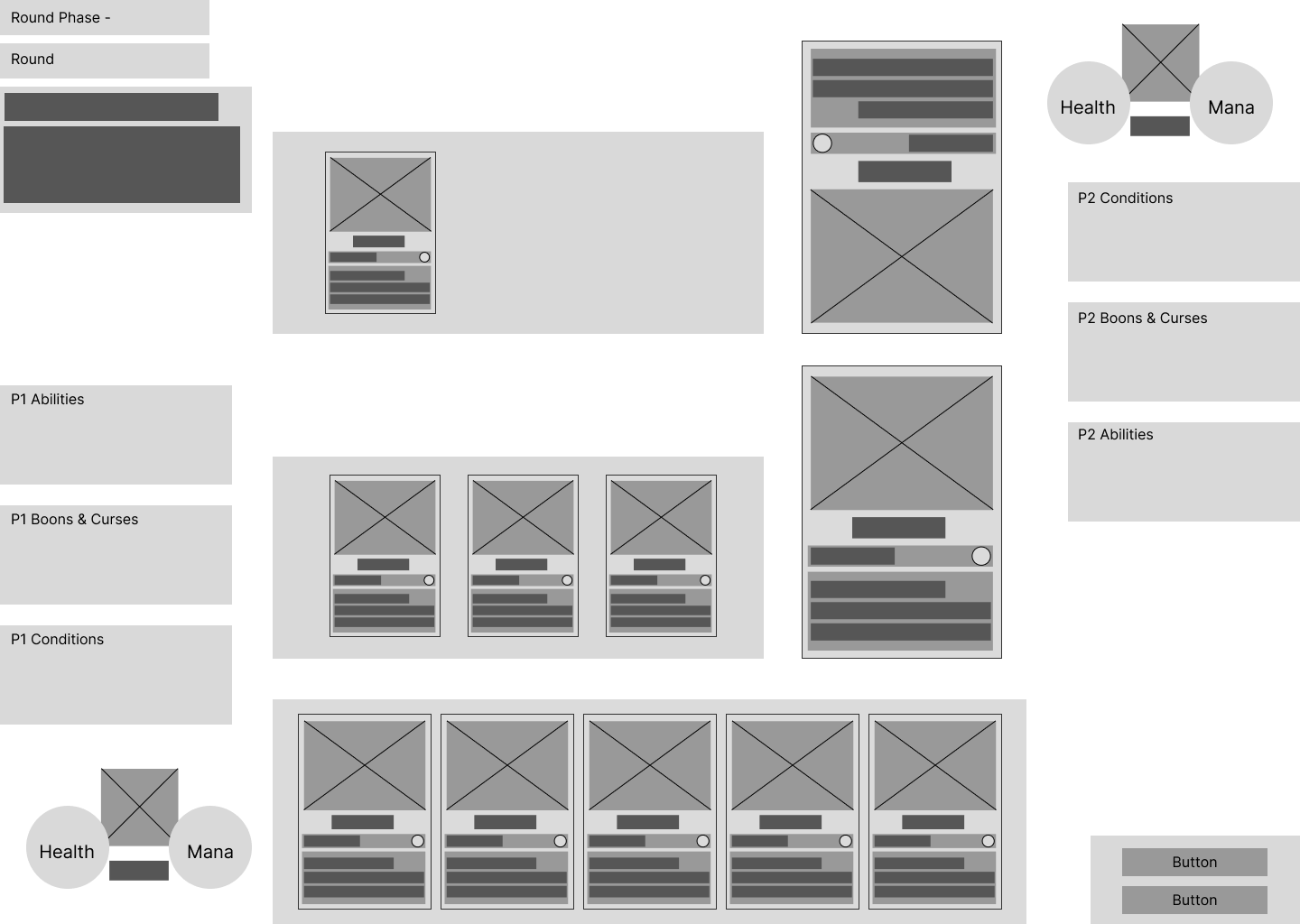
- Keep board state readable at a glance (skills, schools, modifiers, combo effects)
- Preserve the tabletop feeling while adding digital clarity (tooltips, previews, confirmations)
Research:
To avoid designing in a vacuum, I studied both:
- The physical tabletop layout of Ambal (how players naturally organize cards, what information they scan first)
- Established digital card games (eg. Hearthstone, Magic: The Gathering, Shadowverse, Yu-Gi-Oh! Master Duel) to identify proven patterns for readability and tempo (hand visibility, board zones, stack/chain resolution, tooltips, turn/phase cues)
Key UI Decisions:
Clear zones that match tabletop behavior
I separated the interface into consistent areas (hand, committed cards, revealed outcomes, and effect/modifier area) to prevent scanning fatigue and reduce misreads during fast decision-making.
Progressive disclosure for combo complexity
Rather than showing every rule and modifier at once, I used tooltips/inspect panels and previews so the default view stays clean, while advanced players can drill into exact combo logic when needed.
Strong feedback for commitment and reveal
Since simultaneous play hinges on trust and clarity, I designed obvious “committed” states and a distinct reveal animation/state so players can confidently understand what was locked, what was revealed, and why.